
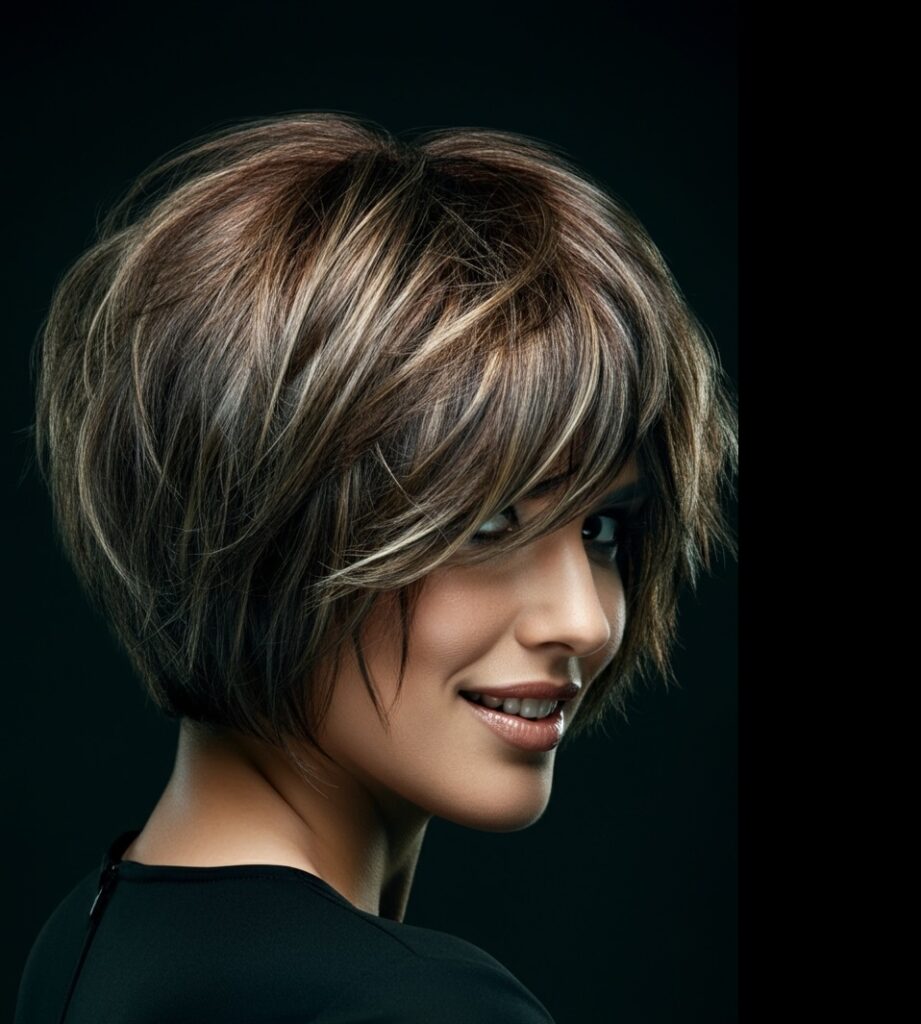

There is something about a messy bob that feels effortless and lived-in, yet completely intentional. It is the kind of haircut that softens a face, adds movement where hair has gone flat, and takes years off without a single drop of filler. Women who cut into a messy bob often say the same thing: people start asking if they changed something, if they slept well, if they got work done. The answer is usually just scissors and a little texture.
This article walks through ten of the most flattering messy bob variations, explains why each one works, and tells you exactly who each style suits best. Whether your hair is fine, thick, curly, or color-treated, there is a version of the messy bob that will work for your face shape, your lifestyle, and your morning routine.
Why a Messy Bob Makes You Look Younger
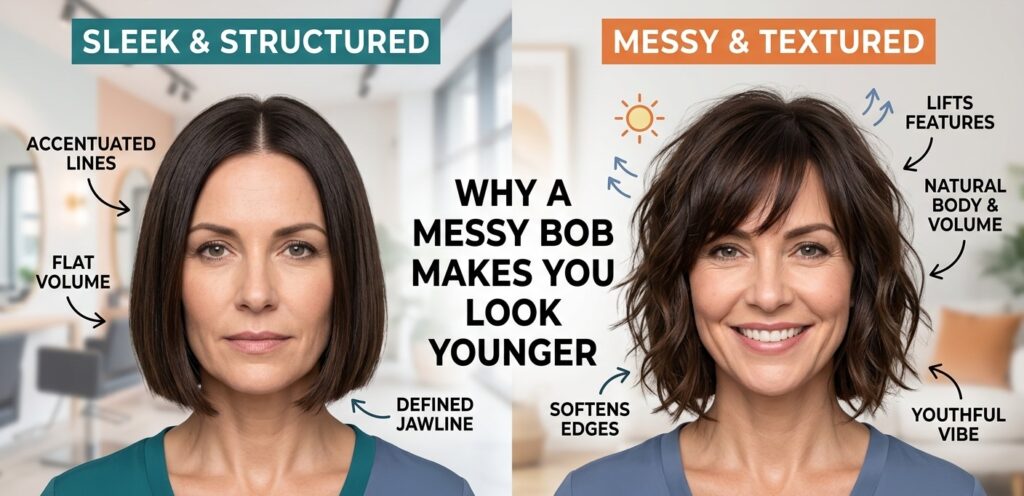
Before diving into the styles, it helps to understand the science behind why this cut works the way it does.
As we age, hair tends to lose density, natural oils, and elasticity. Sleek, heavy styles pull downward and emphasize volume loss. Texture, on the other hand, creates the illusion of fullness. A messy bob works with this by adding layers, movement, and visual weight exactly where you need it.
The length itself matters too. A bob that sits somewhere between the jawline and the collarbone draws the eye to the neck and cheekbones, two areas that create a youthful frame around the face. Long hair past the shoulders, especially when it gets thin at the ends, can pull the face downward. Cutting it into a bob lifts everything.
According to celebrity hairstylist Jen Atkin, who has worked with clients ranging from Jennifer Lopez to Chrissy Teigen, cropped cuts with texture are among the most universally flattering options for women over 35 because they add movement and reduce the visual weight of thinning ends.
1. The Textured Lob (Long Bob) with Face-Framing Layers
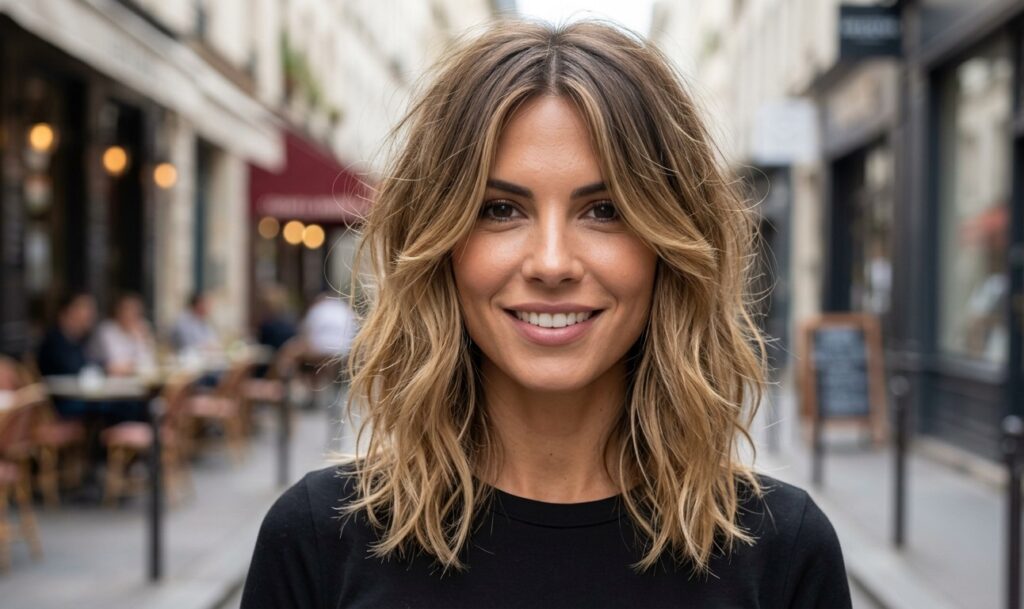
The textured lob sits right at or just below the collarbone. It is the softest entry point into the bob family, making it ideal for women who are nervous about cutting too much length at once.
What makes this style youthful is the face-framing layers. A skilled stylist will cut a few longer pieces around the face that fall slightly forward, drawing attention to the cheekbones and eyes. When those pieces are left slightly wavy or undone, they create a soft, romantic frame that no blunt cut can replicate.
This style works best on women with oval or heart-shaped faces. It adds width at the jaw for heart-shaped faces and maintains the natural balance of oval faces. Women with thick hair benefit most here because the layers remove bulk while preserving the look of density.
To style it at home, apply a small amount of a lightweight sea salt spray to damp hair, scrunch gently, and let it air dry or diffuse. Do not brush it out. The texture comes from letting the natural wave or bend in the hair do its work.
A good reference point is the work of stylist Chris McMillan, who cut Jennifer Aniston’s famous shag-lob hybrids throughout the 2010s. The signature of those cuts was always the face-framing texture, never the blunt edge.
2. The Choppy Bob with Lived-In Ends
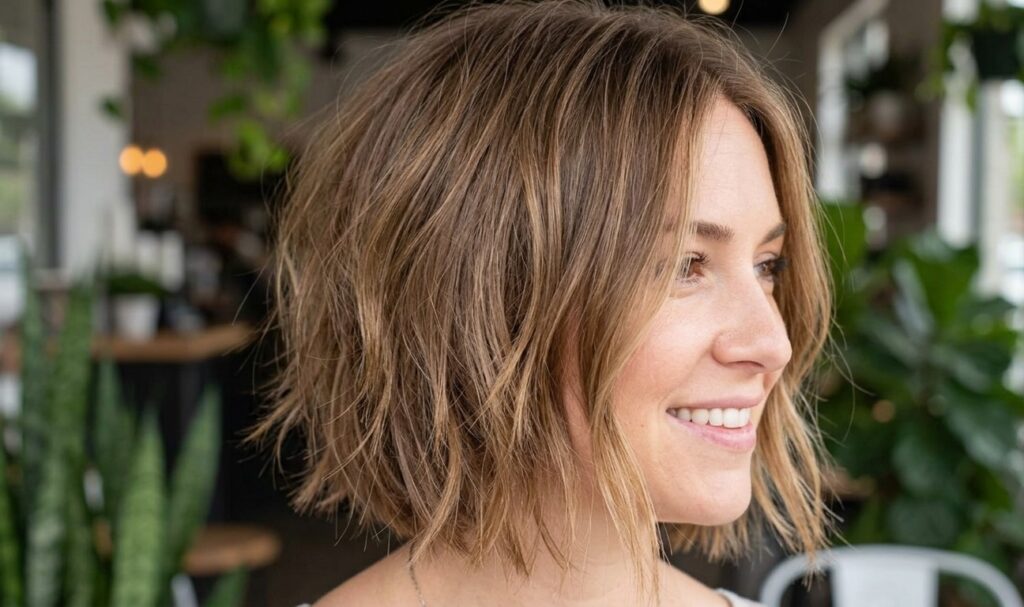
A choppy bob is cut with point-cutting or razor techniques that leave the ends uneven and undone. It sits anywhere from the jaw to the shoulder and looks deliberately imperfect, which is exactly what makes it work.
This cut adds the most visible texture of any bob variation. The uneven ends catch light differently at every angle, which creates the appearance of thickness even in fine or thin hair. For women whose hair has thinned at the ends, a choppy bob removes the wispy, flat-looking length and replaces it with deliberate, bold edges that look intentional rather than sparse.
Face-shape-wise, this cut flatters round faces particularly well. The slight asymmetry and sharp ends create vertical lines that elongate the face. Hairstylist and texture specialist Frédéric Fekkai has noted in multiple interviews that razor-cut ends on medium-length hair create a kind of optical illusion of density that no product can fully replicate.
At home, work a small amount of pomade or a texturizing paste through dry hair, focusing on the ends. Rake it through with your fingers rather than a brush. The goal is separation, not smoothness.
3. The Curtain Bang Bob
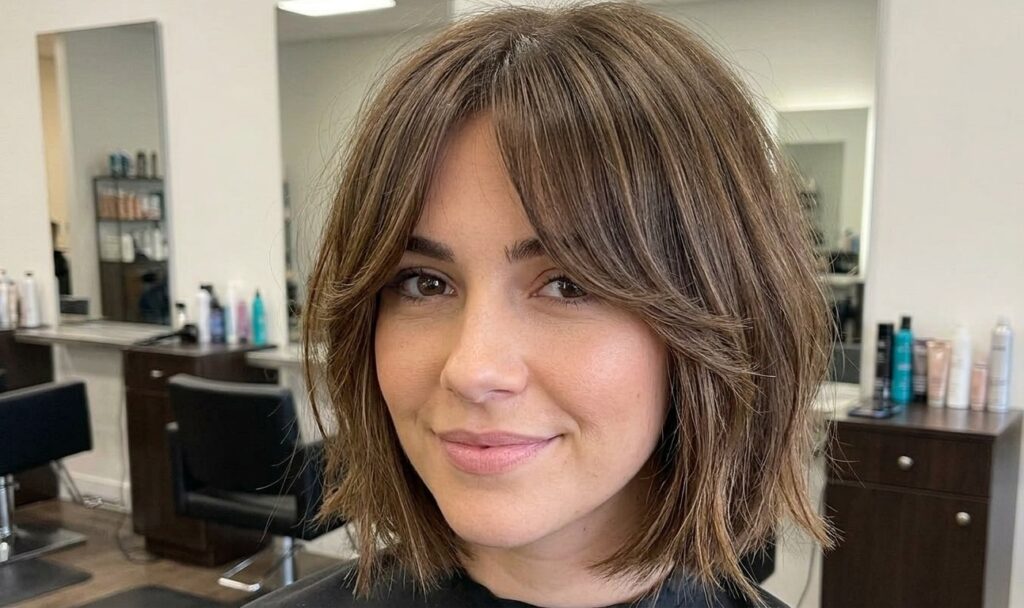
The curtain bang bob pairs a classic bob cut with a center-parted fringe that falls softly on either side of the forehead, framing the face like curtains around a window. It became one of the most searched haircut combinations of the early 2020s, and for good reason: it genuinely works on almost everyone.
Curtain bangs soften the forehead and brow area, which is often where the first visible signs of aging appear. By drawing attention down toward the bridge of the nose and eyes, the bangs shift the focal point of the face. They also add movement near the face, which reads as youthful energy in a way that a bare forehead with a blunt bob does not.
This style suits most face shapes. Women with square or rectangular faces benefit the most because the soft, swept fringe breaks up sharp jaw lines. For women with a larger forehead, curtain bangs are transformative.
The maintenance on curtain bangs is lower than most people expect. They grow out gracefully, and between cuts, they can be tucked behind the ear or swept fully to the side. The key is asking your stylist to cut them long enough that they blend into the rest of the bob without a visible line of demarcation.
4. The Asymmetrical Bob
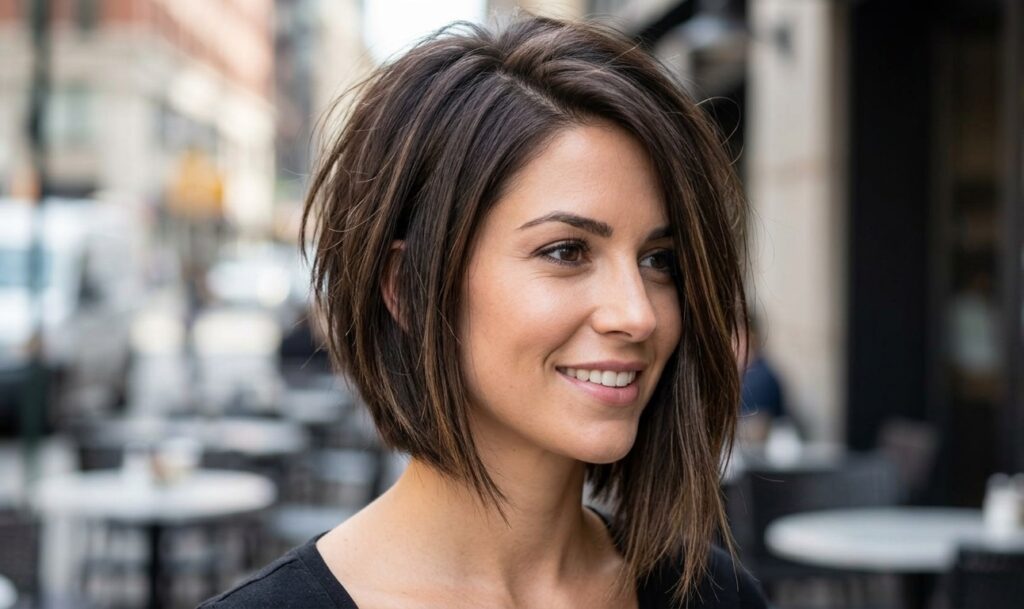
An asymmetrical bob is longer on one side than the other, typically with a difference of one to three inches. It is bold, modern, and one of the most effective cuts for creating a youthful angular energy.
The reason it reads as youthful is movement and geometry. A perfectly even haircut can look matronly, especially as hair loses its natural bounce. An asymmetrical cut creates a constant visual shift because the longer side falls differently depending on how you move. It gives the impression of dynamism.
This style suits oval and oblong face shapes best. Women with very round faces sometimes find that the asymmetry draws more attention to the width of the face. If you have a round face and want this cut, ask your stylist to keep the longer side longer rather than dramatically short so the difference is subtle.
Celebrity hair colorist and cut specialist Guy Tang has recommended asymmetrical bobs specifically for women over 40 who want something that feels young without being trendy in an uncomfortable way. The asymmetry, he notes, is classic enough to age well across decades.
5. The Wavy Bob with Soft Texture
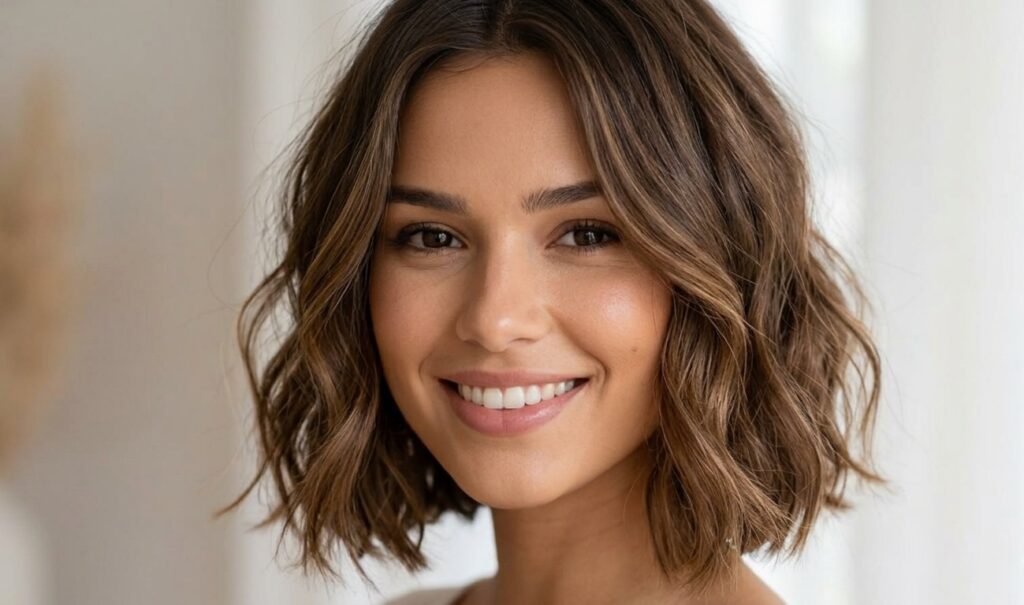
This is the most low-maintenance option on this list. A wavy bob works with whatever natural wave or curl pattern you already have, using a cut that enhances that texture rather than fighting it.
The key feature of a wavy bob is the cut itself. Layers are essential. A stylist familiar with curly or wavy hair will cut each curl individually, removing weight from the interior of the hair rather than just the ends. This technique, sometimes called dry cutting or deva cutting, creates volume at the crown and softness at the perimeter rather than a triangle shape.
Wavy hair naturally creates fullness that straight hair lacks. This volume around the face adds a youthful softness, and the movement of waves is inherently lively-looking. Women with wavy or curly hair who have been straightening it for years often find that embracing their natural texture and pairing it with a good bob cut takes ten years off their appearance.
Lorraine Massey, the pioneer of the curly girl method and author of “Curly Girl: The Handbook,” has long advocated for cuts that respect curl patterns and eliminate uniform blunt edges, which flatten and stretch curl shape rather than enhance it.
6. The Shaggy Bob (The Shag-Bob Hybrid)
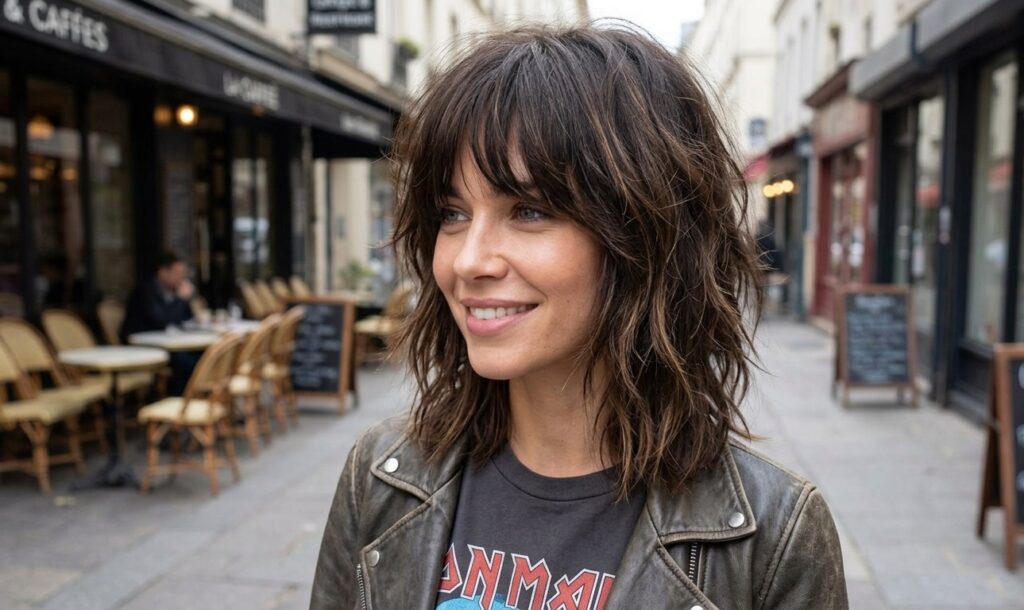
The shag is one of the oldest rock-and-roll haircuts in history, originally popularized in the early 1970s. The modern shag-bob brings that same energy into a shorter length, combining heavy layers with visible texture and sometimes curtain bangs.
What makes it look younger is the sheer volume of layers. A shag-bob has layers starting at the crown, falling through the mid-lengths, and finishing with choppy ends. That layering structure removes bulk from the interior, creates movement, and adds visual interest at every level of the cut. It is the opposite of flat.
This cut is especially effective for women with medium to thick hair who feel weighed down by their length. The shag-bob removes the heaviness and replaces it with bounce. Fine-haired women can also wear this style, but the layers need to be subtler to avoid making the ends look too wispy.
Stylists like Sally Hershberger, who cut Meg Ryan’s iconic shag in the 1990s, have spent careers demonstrating how this approach to layering creates the most natural, effortless-looking fullness of any technique.
7. The French Bob
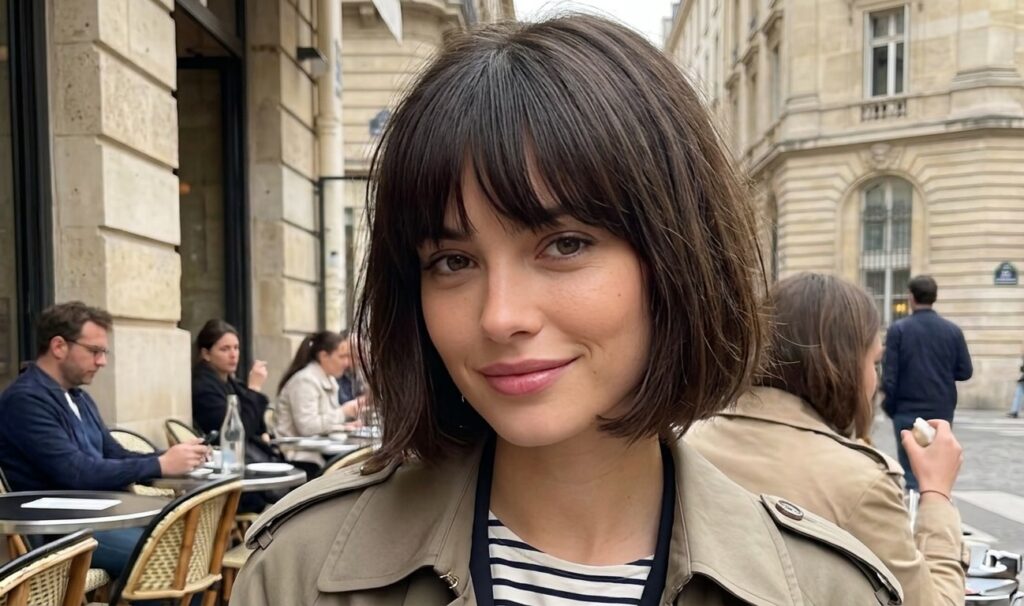
The French bob sits just below or at the jawline, usually with a straight or slightly textured fringe. It is shorter than most bobs on this list, and its power comes from its sharpness and geometry.
This is a cut with history. Parisian women have worn versions of this since the 1920s. What keeps it looking fresh rather than dated is the way it frames the jaw and neck. When hair is cut to sit right at the jaw, it creates a natural lift and draws the eye to one of the most youthful parts of the face: the cheekbones and the curve of the jaw.
A messy version of the French bob, rather than the sleek, combed-out version, adds modern relevance. Piece-y, slightly undone texture at the ends and a soft rather than blunt fringe makes it accessible to a wider range of women and ages.
This cut suits women with defined jaw lines and medium neck length best. It can make a short neck look shorter, so if that is a concern, ask your stylist to keep it slightly longer in the back. Women with oval and heart-shaped faces wear this cut exceptionally well.
8. The Collarbone Bob with Lived-In Waves
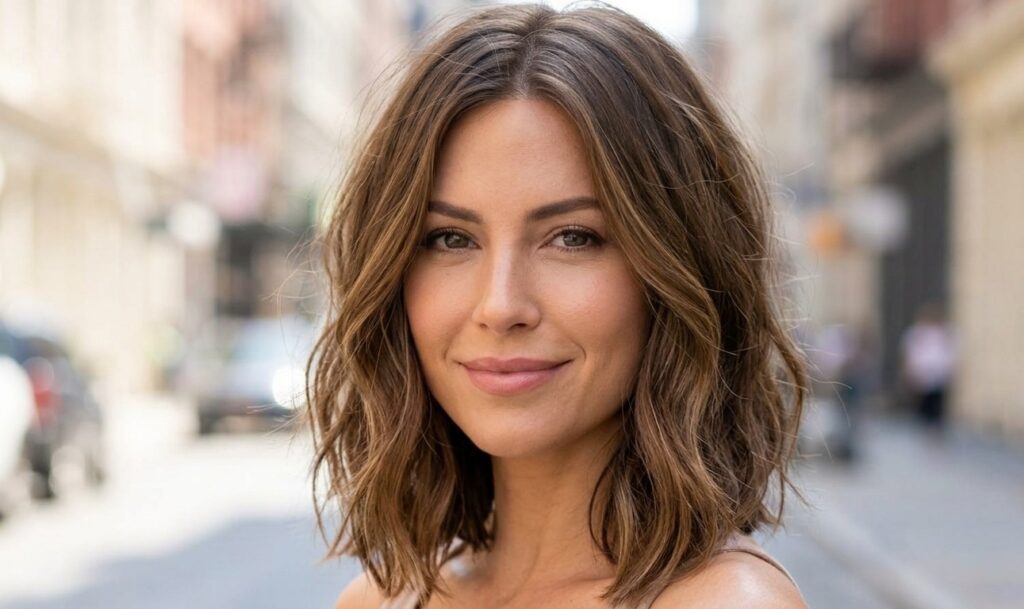
Sitting right at the collarbone, this bob is longer than the classic but shorter than a traditional lob. It works specifically because of where it ends: at one of the most elegant parts of the body.
The collarbone is a visual anchor. When hair ends there, it draws the eye to the neck and décolletage, two areas that read as youthful and elegant. Women who have always worn their hair much longer sometimes cut to this length and are surprised by how much more refined and awake they look.
The lived-in wave component is important. This is not a blow-dried, smooth version of the cut. It is styled with a wide-barrel curling iron or left to air dry with a wave-enhancing cream, creating loose, natural-looking bends rather than tight curls or straight lengths. That softness is what prevents the cut from looking severe.
This style is versatile enough for most face shapes and works particularly well for women transitioning out of very long hair. It is approachable, elegant, and genuinely low-maintenance once you learn to work with the waves rather than against them.
9. The Blunt Bob with Texture Product
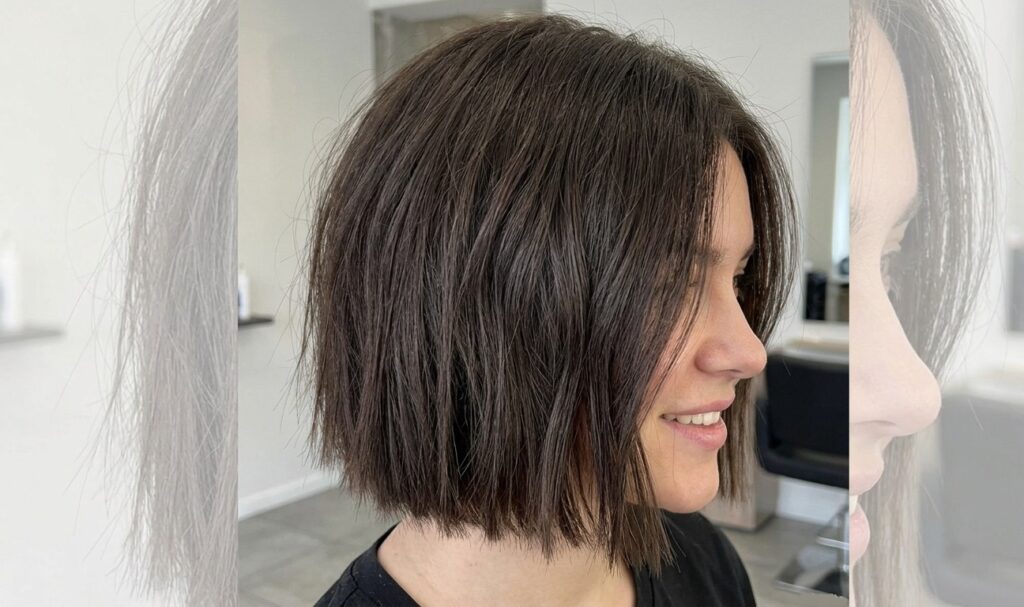
This one might seem like a contradiction: a blunt bob does not have layers, and layers are what most texture comes from. But a blunt bob styled with the right texture product becomes something entirely different from a sleek, flat, one-note cut.
The blunt bob works by creating a strong geometric shape. The clean line at the ends creates a visual frame around the face that is graphic and modern. The youthfulness comes from the deliberate styling, not from movement within the cut itself.
To style this with texture, apply a medium-hold clay or matte pomade to dry hair and use your fingers to create slight separation at the ends. Push the hair forward slightly at the crown to create volume. The result is a cut that looks intentionally imperfect rather than overly done.
This works best for women with naturally straight hair who want something polished but not stiff. It suits square and oval face shapes particularly well. The geometric line of the blunt ends complements strong bone structure.
Hairstylist Anh Co Tran, known for his razor-precise blunt cuts on Asian and straight hair types, has demonstrated extensively how a well-executed blunt bob with strategic texture can look more modern and youthful than heavily layered alternatives.
10. The Disconnected Undercut Bob
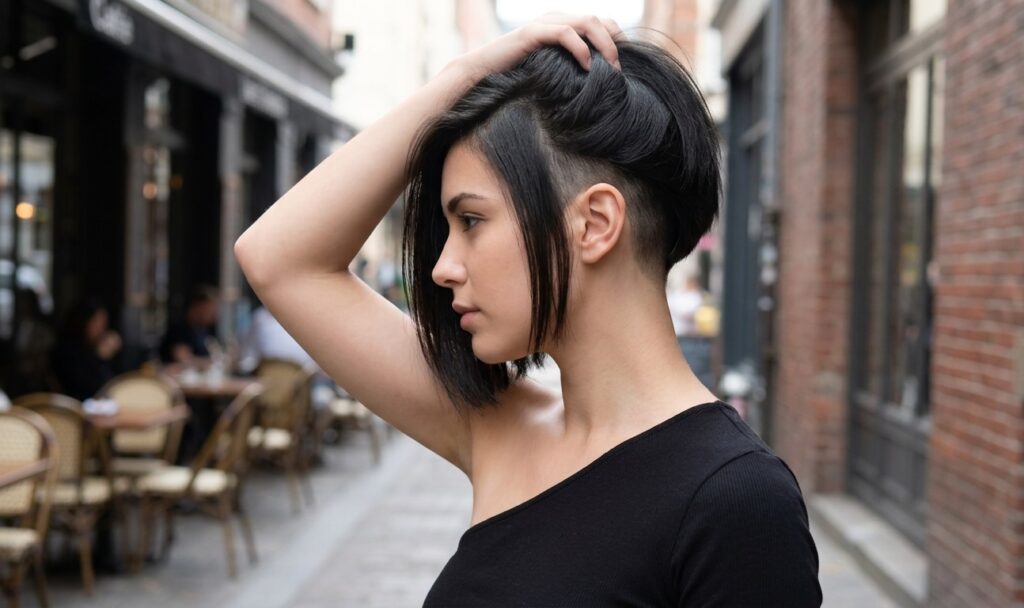
This is the boldest option on this list and the one most likely to provoke a strong reaction. A disconnected undercut bob has the longer, visible top section cut into a bob shape, with an undercut hidden underneath that removes significant weight from the nape and sides.
The result is a cut that looks full and textured on the outside but feels incredibly lightweight. Women with thick, heavy hair who have always avoided bobs because of the bulk often find this cut transformative. The top section falls naturally with more movement once the underlying weight is gone.
The disconnected undercut also allows the top section to be styled with looser, more effortless texture because it does not have several inches of dense hair pulling it down. The overall effect is a bob that looks like it barely tries, which is the entire point of the messy bob aesthetic.
This cut requires a stylist with precision skills and experience in undercut work. It is not something to attempt at a budget chain salon unless you have seen their portfolio. When done right, it is one of the most flattering and long-lasting cuts on this list. It grows out gracefully because the undercut simply becomes less pronounced rather than distorting the shape.
How to Talk to Your Stylist About a Messy Bob
The phrase “messy bob” means different things to different people. When you sit down with your stylist, the most useful thing you can do is bring reference photos, plural. One photo rarely captures every element you like. You might love the length in one photo, the texture in another, and the way the bangs fall in a third.
Beyond photos, describe your lifestyle. If you wash your hair every day, your styling needs differ from someone who washes twice a week. If you heat-style regularly, a cut that relies on natural texture will require more effort than you are used to. Your stylist needs this information to recommend the right version of a messy bob for your actual life.
Ask specifically about the cutting technique. Point-cutting and razor-cutting both create texture but produce different results. Point-cutting gives softer, less dramatic texture. Razor-cutting creates more dramatic, piece-y ends. If you have fine hair, ask your stylist which technique works best for your density and wave pattern.
Finally, ask about the grow-out. A good messy bob should look intentional at every stage of growth, not just immediately after the cut. Ask how many weeks between cuts you can expect before it starts to lose its shape.
Products That Actually Make a Messy Bob Work
The cut does most of the work, but the right products carry the rest.
Sea salt spray is the most universally useful product for messy bobs. It enhances natural wave and curl, adds grip, and creates that lived-in texture without stiffness. Apply it to damp hair and either air dry or diffuse for the best results.
Texturizing paste or clay gives separation and hold to dry hair. It is the product to reach for if you want to define individual sections and create a more deliberate undone look. Use a small amount, work it between your palms, and run it through the ends and mid-lengths of dry hair.
A lightweight dry shampoo used at the roots adds volume and absorbs oil without making the hair look powdery. It also gives grip, which helps texture hold throughout the day.
Avoid heavy serums and smoothing creams on most messy bob styles. They add shine but eliminate the texture that makes the cut read as youthful and full. Save those products for blowout days.
Final Thoughts
A messy bob is not a compromise between wanting short hair and being afraid of it. It is a deliberate, well-thought-out cut that uses texture, movement, and length to create a genuinely more youthful look.
The ten styles covered here range from subtle to bold, from low-maintenance to precision-dependent. The right one for you depends on your hair type, face shape, lifestyle, and how much of a shift you want to make. Start with the styles that feel closest to what you already have and work toward the ones that feel like a stretch.
What every one of these cuts has in common is this: they all make the hair look alive. That is what youth looks like in hair, and that is exactly what a good messy bob delivers.